
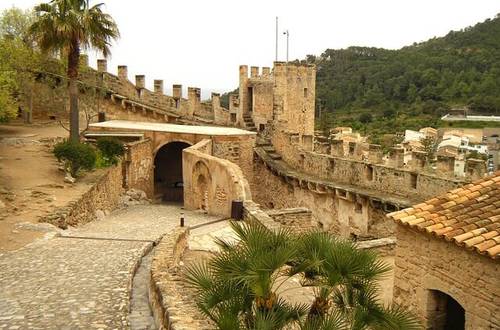
The history of Mallorca began millennia ago. Since time immemorial, the island has captivated with its unspoiled nature and dreamlike landscape.
Not far from the east coast of Spain, millennia ago, began the History of Mallorca.For as long as anyone can remember, the largest of the Balearic Islands has fascinated with its unspoilt nature and dreamlike landscape. The first holidaymakers arrived on the island in the western Mediterranean in the 19th century. From the 1950s onwards, Majorca developed into a coveted destination for Germans. Since then, the Mediterranean holiday paradise has been considered a tourist magnet. Just a 2-hour flight away, you can immerse yourself in its rich history.
Discover evidence of the island's history
Until 7th millennium BC Mallorca's oldest finds date back to the prehistoric caves of Sóller and Valldemossa date back to the earliest remains of human settlement. Ceramic and metal vessels indicate that Mallorca's history was shaped by early trade relations with North Africa. With the advent of agriculture and animal husbandry, stone dwellings were built. The best-preserved Talayots can be found near Lljucmajor and Artà. Throughout history, Carthaginians, Vandals, Moors, and Aragonese left their unmistakable influence. Mallorca owes its name, as well as the economic success of wine, olives, and salt, to the Romans. The inhabitants of antiquity are considered the founders of the capital city, Palma.
With highlights such as the construction of the railway line from Palm Nach Inca beckons The more recent history of Mallorca.Today, you can enjoy what is arguably the most beautiful railway section between Palma and Sóller, covering a total of 300 kilometres of track. In 1833, the first ferry connection from Barcelona to Palma was established. What began with sailing boats and steamships later continued with modern ferries. Mallorca's first hotel began operations in Valldemossa in 1899. From 1935, there were regular holiday flights to Palma. Three years later, a Lufthansa aircraft landed for the first time. The airport now handles an influx of around 28 million passengers annually. Among the arrivals on the charming holiday island are nearly 10 million Germans.
From the early days of tourism
In the winter of 1838, the French writer George Sand arrived in the company of her two children and her lover Frédéric Chopin to the island. Their travel experiences went down in the history of Mallorca. As their son Maurice suffered from rheumatism, the blended family had fled their lives in Paris. The Majorcans met their guests with extreme mistrust. It was only in the hinterland that the holidaymakers found accommodation. But Chopin fell ill. Fearing contagion, the landlord terminated the lease. As there were no hotels on the island, the French found shelter in the monastery of Valldemossa. In a former monk's cell, they awaited their first crossing in spring. It went down in the history of Mallorca that Chopin completed his famous Préludes here. On the return journey to the mainland, they were only left with a stuffy cabin, as the upper deck was crammed full of pigs. Three years later, Sand's literary classic „A Winter in Majorca“ was published. In her work, you can read that the island was probably the most beautiful place the author had ever lived in.
At the start of the 20th century, the first holidaymakers from the mainland
They came predominantly from Spain and England. From 1903 onwards, several hotels opened. The „Gran Hotel“ on Placa Weyler is still one of the capital's landmarks that has gone down in Mallorca's history. It was closed in 1975 due to obsolescence. Today it belongs to the La Caixa Foundation, which uses the magnificent premises as a cultural venue. The „Gran Melia Victoria“ on Palma's waterfront is still in operation. In
Port de Pollença
In 1929, the first guests checked into the „Hotel Illa d'Or“. In the same year, the legendary „Hotel Formentor“ was established. A look at the illustrious clientele from all over the world reveals the prestige the hotel brought to the island. Winston Churchill, Charlie Chaplin, Helmut Schmidt, Grace Kelly, and Prince Rainier have all relaxed here. In 1905, journalist Enrique Alzamora Gomá founded the „Fomento del Turismo“ institution. The tourism association is the oldest in the world. To this day, the company offers maps and travel guides, excursions, and trips. 1907 saw Mallorca's history made by the arrival of the first organised tour group at the port of Palma.
How the tourism boom began
More and more holidaymakers are arriving on the picturesque island. The tourism association is advertising with the mild climate.In 1935, Mallorca already welcomed 50,000 guests. Tourism ceased during World War II. In 1950, nearly 100,000 holidaymakers were drawn to the Mediterranean island. The following year, the number of visitors had already doubled. From 1960 onwards, Head of State Franco actively promoted the island as a holiday destination. With the opening of Son Sant Joan Airport, the era of mass tourism began in Mallorca's history. Over 1 million holidaymakers now flocked to the island annually. Bookings have been steadily increasing ever since. 30 years later, with more than 6 million guests a year, Mallorca is considered Europe's most popular holiday destination.
Around 1970 recognise German business people
your chance in the gastronomy and tourism sector. Also present is Erwin Bornscheuer from Düsseldorf. With the „Carrusel“, he is opening the first discotheque in Mallorca's history. Horst Abel travelled from Fulda. The trained butcher emigrated with little starting capital. All he had in his luggage was the business idea for a meat and sausage factory. Initially starting in a snack bar, his homemade sausage quickly began its triumphal march. In 1988, Abel, as the entrepreneur of 20 of his own businesses, took over the discotheque „Carrusel“. It was reopened as Mallorca's first own brewery. East of Palma the „Ballermann“ was created. Over 6 kilometres of beach with 250 hotels, „Malle for everyone“ became an entertainment hub for budget holidaymakers. The most important meeting point for German sociability is the stretch of beach known as „Ballermann 6“. Thirsty tourists party at the „Hofbräuhaus“ or „Oberbayern“. The celebratory mood has secured many jobs and considerable revenue for the tourism industry throughout Mallorca's history.
Off the beaten track
Mallorca is rightly known as the „Isle of Silence“known. In the seclusion of a breathtaking landscape, nature lovers can enjoy an impressive diversity. More than a third of the island world is a nature reserve. Hikers are drawn here not only during the Almond blossom. While you are the spectacular Tramuntana Mountains sun-worshippers conquer remote bays. Mallorca's history is also marked by German celebrities who live on the island all year round or at certain times. They particularly appreciate the excellent infrastructure. With no language barriers, there are exquisite restaurants, plenty of golf courses, German doctors, well-maintained roads, and good flight connections. After decades of mass tourism, Mallorca is increasingly focusing on individuality in the future through health promotion, alternative holidays, and event and themed tours.
Title image: Copyright @ pixabay / castigatioxes
 German
  English
  Spanish