
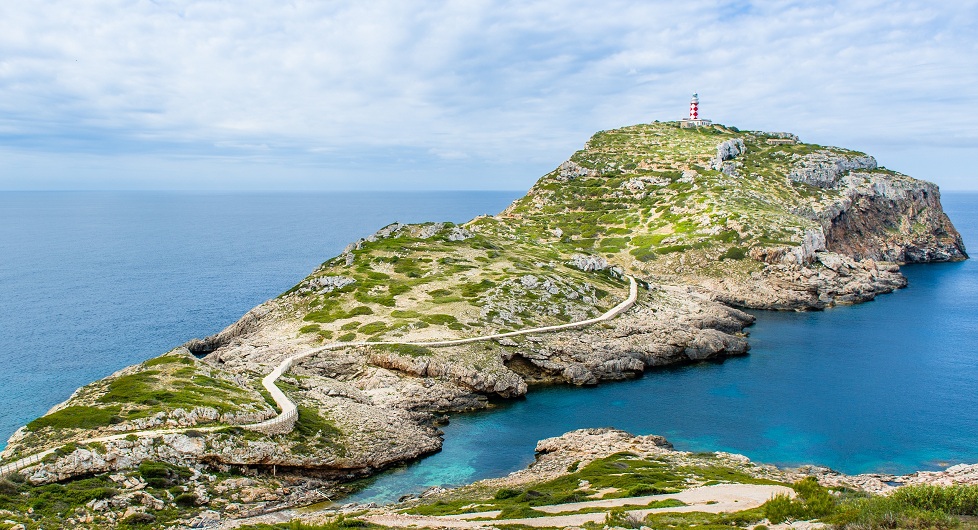
The island of Cabrera is Mallorca's largest and only national park. The uninhabited island is only accessible by boat and offers picturesque landscapes and a variety of endangered bird species.
Cabrera, also known as „Goat Island,“ is the largest island in a rocky archipelago located off the southern coast of Mallorca. The only national park in the Balearic Islands is approximately. 12 km south of Cap de ses Salines, the southernmost tip of Mallorca and is characterised by its marine ecosystem. With an area of 1155 hectares, the national park on Cabrera Island is the largest contiguous nature reserve in the Balearic Islands.
In 1991, the area was declared a National Park due to its endemisms and significant bird species. In total, around 19 islands and islets belonged to Cabrera National Park, stretching over an area of 10,021 hectares – 1,318 of which were on land. The coasts of the island group are considered the most original in Spain. From an administrative perspective, Cabrera belongs to the Balearic Islands. Capital Palma de Mallorca.There are no more goats on Cabrera; they were removed from the island several years ago when there were concerns that the goats would overgraze the green spaces.
Cabrera – breathtaking national park for endangered species
This vast area naturally offers space for numerous endangered animal species, including around 130 bird species, but also Sea turtles and lizards find a home here.For bird lovers, the island's picturesque landscape is a true dream. The most common birds that also breed on the island are the Eleonora's falcon, osprey, peregrine falcon, and the Audouin's gull.
In the meantime, Cabrera National Park is also an important stopover for migratory birds. Other endangered species such as the Balearic shearwater or the Yelkouan shearwater breed on neighbouring islands like Conillera and Fonoll. Through the steep cliffs around the island
The birds dive down repeatedly to hunt small birds, insects, or fish. All mammals living there were introduced to the island by humans with the exception of some bat species. Native plant species such as the wild olive tree, Phoenician juniper, rosemary, or lemon balm shape the landscapes and grow exclusively on this island.
In the blue depths of the sea
As soon as you get close to the island, you’ll notice the famous Poseidon's weed. The sea area around the island is largely covered by it – a real blessing for the approximately 200 different species of fish. Many rare fish and coral species have settled in countless small caves.
As a special The „Blue Grotto“, also called Cova Blava, is considered a sight., A cave 160 metres long and 50 metres wide on the north side of Cala Gandulf. The impressive blue light is created by reflections on the sandy bottom and bathes the entire cave in blue light. Unfortunately, the grotto is only accessible from the sea and is visited on the way back to Mallorca after the day trip on the island. With a lot of luck, you can observe dolphins, whales and sea turtles on a dive. Water sports and fishing are strictly forbidden here. The Spanish coastguard regularly carries out thorough checks to ensure that the nature reserves are also complied with by boats and ships.
An unforgettable day trip by boat
The island is exclusively accessible by boat. Cabrera used to be part of mainland Mallorca and only separated from the main island about 15,000 years ago. The crossing to the island is mostly from the approx. 30 minutes away Port de Sant Jordi in Colònia or the 75-minute distant port Porto Petro.
As a rule, you set off early in the morning and return around 18:00 from a breathtaking day trip. Upon arriving in Cabrera's only port, you will not only be greeted and registered in a friendly manner, but hikers usually receive free information and are accompanied on tours by locals. It is strongly advised to stay on the excellent paths and to respect nature and its values. Unique is the breathtaking sunset on the island; a small bar on the island in the village of Es Port offers Snacks and drinks, to round off the romantic evening perfectly.
The History of Cabrera Island
The uninhabited, picturesque landscape was severely affected during the Spanish War of Independence. During the war, around 12,000 French prisoners of war are said to have been housed here. Due to a lack of food and medical care, about half of them are said to have died. The monument in the centre of the island commemorates this terrible and tragic episode in the island's history.
The mighty castle ruins on Cabrera date back to the 14th century.
and was created as a bulwark against pirates, who often sought a hiding place. Next to the small local museum Es Celler, which is housed in the storeroom of a former farmhouse, the castle ruins are one of the most popular hiking destinations on the island.
Image above: ©iStock.com/AlexanderNikiforov
 German
  English
  Spanish