
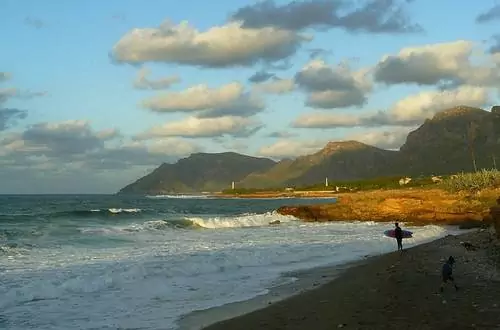
Surfing in Mallorca is becoming increasingly popular and is developing into a real alternative to the popular hotspots in Portugal or France.
Mallorca is known for its diverse landscapes and is considered one of the most versatile destinations. Mallorca's approximately 550-kilometre coastline now offers a surprisingly wide selection of surf spots for different skill levels – from beginner-friendly beach breaks to powerful reef waves in the east.
Mallorca was not a typical destination for surfers for a long time, as it competed with the very popular hotspots in Portugal, the Canary Islands, or France. However, there is a big advantage if you want to surf in Mallorca: Here we have an above-average number of days with suitable surf conditions. In addition, there is relatively a lot of wind during the cooler months. Although Mallorca is not a classic „surfing mecca“, a stable community has developed on the island, and on good days, 30 or more people can quickly be found in the water at the main spots.
Surfing in Mallorca – Recommendations and Tips
For surfing in Mallorca, watersports enthusiasts require optimal wind and water conditions. The most reliable conditions for wave riders are found in Late autumn, winter and early spring, rough between October and March, when storms in the Mediterranean bring the necessary swells. In the height of summer, classic wave surfing is significantly less reliable, but short windswells and wind chop frequently provide smaller sessions, particularly in the north and northeast – often ideal for longboards or softboards. From October, low-pressure systems shift from the polar cold front towards the Mediterranean, then meet warmer air. This results in optimal wind and waves for surfing. Although it is cooler than in summer, the air and water temperatures are generally still mild and pleasant. Winter primarily provide the Bay of Palma and Alcúdia multiple surfable days in a row; in Autumn and Spring particulary the exposed beaches on the east coast such as Cala Mesquida or Cala Torta work well.
An analysis by the University of the Balearic Islands concludes around 175 days per year, that you can find surfable waves somewhere on the island. Nevertheless, if you want to surf in Mallorca, it requires more experience on the board and, not least, more effort than elsewhere, because the waves here are generally not generated as consistently as, for example, in the surfer's paradise Bali. The reason for this is simple: the wind on the island blows from many different directions and with varying strength.
- The Mistral is prevalent on the Balearic island and is called „Tramantora“ by the locals. Every now and then, several cumulus clouds announce a freshening of the Tramantora.
- The Lift and comes from the east, occurring mainly between May and October. The wind is characterised by thin cloud veils and poor visibility.
- The West is a weak westerly wind and blows primarily in the winter months. This wind is strongest at the beginning of autumn.
- All thermal winds On Mallorca, they are grouped under the term „Embat“.
In total, there are around 40 surf spots in Mallorca. Most of the places are on the southwest and northeast coasts of the island. Surf lessons for beginners and advanced surfers are available at several beaches. Private surf lessons currently range from 70 and 80 € per hour, while group lessons and multi-day packages are significantly cheaper. The board and equipment, as well as suitable insurance, are usually included in the prices.
Beginners should ideally choose the spot for their first steps in Colònia Sant Pere wählen. There are hardly any rocks here and the water is deep. Additionally, the gentle waves are particularly well-suited for inexperienced surfers. Surfers travel to Mallorca either by plane or by car and ferry.
Many airlines now offer sports luggage fares: Eurowings, for example, accepts a surf bag up to 32 kg for approximately 50 € per leg mit, Ryanair allows 23 kg of surf luggage. A rental car on site is still worthwhile, because with it you can reach any spot on the island in a maximum of 1.5 hours. Anyone who still wants to save hassle and costs can simply rent the equipment on site. On the island there are now sufficient surf schools and shops. The El Niño Surf Center and BonaOna Surf School in the capital are recommended. Palm. Furthermore, at Pollença harbour, you'll find the surf schools Sail&Surf Pollensa and Mallorca Kiteboarding & SUP S.L.
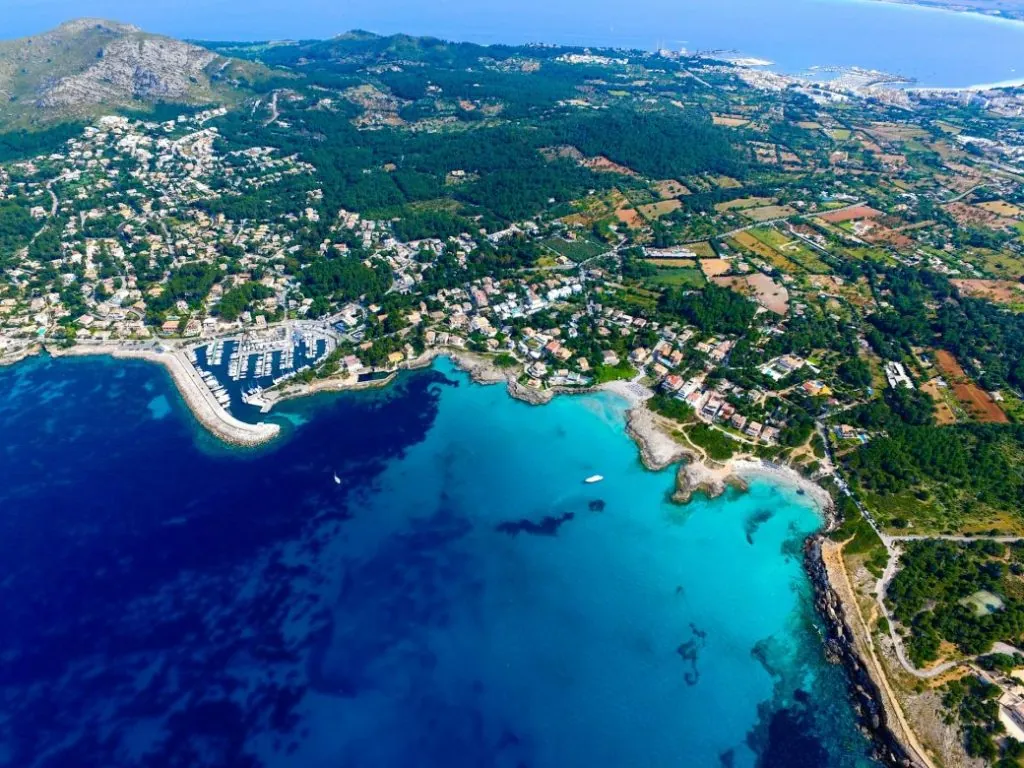
Surfing in Mallorca – the most popular spots for wave riding
The best conditions for surfing are in autumn and winter. After strong winter storms, waves on exposed coastal sections in the northeast and east reach Mallorcan conditions of up to about three metres, but on typical days they are more in the small to medium range, making them ideal for longboarders and beginners. Generally, the Cheese and the northeast of Mallorca best suited for surfing in terms of weather conditions. In the northeast of the island are the two most popular surfing spots: Son Serra de Marina and Cala Mesquida. At both locations, the waves reach the required height.
Cala Mesquida is a manageable and small bay with a beach approximately 500 metres wide and 100 metres deep. As bathers have to arrive by car, the bay is not overcrowded, even in summer. The wind in the bay is particularly strong, and therefore the waves are quite high, especially by Mallorcan standards. Cala Mesquida is located in the Levante Nature Park and catches east to northeast swells very well; the waves here can become powerful by Mallorcan standards, which is why the spot, despite its dreamlike setting, is rather for advanced surfers Is recommended.
Son Serra de Marina is now considered a benchmark spot in the north: a largely undeveloped sandy beach around seven kilometres long with several peaks (including „El Bunker“, „Compuerta“, „Dos Playas“) that, depending on swell and wind, can offer days for beginners as well as challenging sessions for experienced surfers.. The beach is the quietest place in the otherwise lively Alcúdia Bay and is not overcrowded, even during the holidays. Windsurfing and kitesurfing – with a sail and kite, respectively – are also very possible here.
The best spots for windsurfing
Current spot guides mainly mention for windsurfers Can Pastilla, Sa Ràpita, Colonia de Sant Jordi, Portocolom as well as the Alcúdia Abbey and the Port de Pollença as main areas, with a spectrum from shallow water freeride to powerful waves with west and north winds. While the bay of El Arenal is more for party tourists in the evenings and at night, Is the beach suitable for sailors and windsurfers during the day?. The thermal winds are excellent for surfing in Mallorca from midday onwards.
Beginner windsurfers will find in the sheltered bays near Cala d'Or and Porto Colom some good spots. A little further south is the beautiful, kilometre-long sandy beach of Es Trenc. This is particularly suitable for surfing in Mallorca, as the Thermik is first-rate. The same ideal conditions can be found by windsurfers in the beautiful bay of Alcúdia.
Popular spots for kitesurfing
The only official kitesurfing spot on the Balearic island is located in the northern part in the small bay of Pollença. The whole year round, surfers from many different countries meet here with their colourful kites. In the Bay of Pollença, the Mistral is by far the strongest. In addition, the high mountain ranges of Serra de Tramuntana, which frame the bay, for thermal winds. Kitesurfers therefore find Hardly a better spot for surfing in Mallorca. At Port d’Pollença harbour, there are several surf schools that rent out the necessary kite surfing equipment to locals and tourists or offer lessons if you want to learn to surf on Mallorca.
Those who appreciate peace and quiet while surfing in Mallorca will find it outside of Pollença unspoiled beach with a rental station. However, this beach directly borders a country road and is only about 20 metres wide. In the bays of Alcúdia and Palm Although kitesurfing takes place outside the main season, during the summer months the heavily frequented beaches are designated as bathing areas and are closed to kitesurfers. According to Spanish coastal law, kitesurfers must at least 200 m distance keep to the coast and enter and exit via marked water channels; infringements – especially in bathing zones – can result in fines of up to 3.000 € fined, which is why schools and local associations outside the Pollença zone explicitly advise against unauthorised launches from crowded beaches

Surfing in Mallorca – the main advantages over other destinations
The island is gaining more and more recognition within the surfing scene over the years. More than 15 years ago, surfing in Mallorca was nothing more than a fringe phenomenon. The infrastructure was significantly improved in recent years. There are now enough shops and surf schools for you to relax and surf (learn to surf) in Mallorca. Nowadays, at the most popular spots, such as Son Serra, there are over 200 people in the water on any single day.
Another advantage: The Temperatures in Mallorca are mild for almost the entire year. Even during the cold season, sea temperatures do not drop below 13 degrees, even if the average air temperature on that day is in the single digits. This makes surfing in Mallorca also suitable for people who shy away from colder water temperatures. Furthermore, the influence of tides is limited, meaning surfing is possible all day long in good weather conditions. This is not the case in other countries popular with surfers. There are also no sharks off the coast of Mallorca.
Surfing in Mallorca: the most important questions (FAQ)
How high can waves get in Mallorca?
The height of waves in Mallorca can vary greatly and is influenced by several factors, such as the season, weather conditions, and storm activity in the Mediterranean Sea. Generally, waves are highest in winter and during the autumn months, when storms and strong winds are more frequent on the open sea, and waves can build up far offshore from Mallorca. During this time, waves can reach heights of three to four metres, and in rare cases, even higher.
If you want to go surfing in Mallorca, the north and east coasts offer the best conditions, as they have the highest wave heights and the strongest winds. The bays of Alcúdia and Pollença in particular are known for their good surfing potential.
However, it is important to respect the sea and the surfing conditions in Mallorca. Sudden changes in wind can be dangerous for inexperienced surfers. Make sure you check the weather forecast and wave prediction before your surf session and take appropriate precautions.
Although Mallorca hasn't been a classic surfing destination for a long time, you can still experience impressive waves here in good conditions.
2. Where are the best waves in Mallorca?
In the north of Mallorca lies the island's most popular surfing spot, Son Serra de Marina beach. With its long waves and deep blue water, it forms the perfect starting point for exciting surfing fun. Visit this spot for reliably excellent conditions if you want to surf in Mallorca.
Other recommended places for a unique surfing experience in Mallorca include Cala Mesquida beach and the Bay of Pollensa. They offer ideal conditions for both experienced surfers and beginners, and have fairly stable surfing conditions all year round. However, the waves here can occasionally be quite strong, so be cautious.
Finally, Sa Rapita beach in the south of Mallorca offers a rather tranquil surfing experience. The swell here is mostly milder, making it ideal for beginners and those who want to take things a bit easier.
3. Are there waves in Mallorca?
Naturally, wave sizes and intensity vary depending on the season and meteorology, but surfers can definitely find suitable conditions on this island. The north coast of Mallorca offers optimal wind and wave conditions for surfing for a large part of the year. Here you will find beaches such as Playa de Muro or the Bay of Alcudia, which are regularly visited by surfers. But good wave conditions also often prevail on the east coast, in places like Cala Ratjada.
In addition to natural waves, Majorca also offers opportunities for „artificial surfing“. There are several wave pools on the island, which have been specially designed for surfers and can create waves of various sizes and shapes. For artificial waves, there are currently two main options: the Dock39 „SuperWave“ in Fan Mallorca Shopping near Palma, and the artificial wave pool at Hadley's Beach Club in the INNSiDE Wave Calviá hotel, which opened in Magaluf in 2024. Several surf schools are also available for surfing in Majorca, offering courses for beginners and advanced surfers alike. So, whether you are an experienced surfer or just starting out, you can definitely find good waves and enjoy surfing in Majorca.
4. Is Mallorca good for surfing?
However! Mallorca offers a wide range of surf spots and is an excellent choice for anyone seeking the thrilling experience of riding waves. In fact, many surfers find Mallorca ideal for surfing, from beginners to professionals. This is due to the diverse conditions the island offers, with waves to suit all tastes. Whether you are looking for calm spots for beginners or more challenging conditions for experienced surfers, Mallorca has it all. And although there are many other activities you can enjoy on the island, the surfing experience in Mallorca attracts more and more visitors. The northern coast is known for its strong winds and large waves, perfect for experienced surfers. Meanwhile, the southern coast offers gentler conditions, ideal for those just starting out. There are many surf schools and rental shops dotted around the coast, making it easy to get everything you need for a great surfing experience.
The beautiful landscape, pleasant climate, and friendly locals also contribute to an unforgettable surfing experience in Mallorca. Whether you are an experienced surfer or just starting out, you will find that Mallorca is a fantastic place to conquer the waves.
Title image: Copyright @ pixabay / cocoparisienne
 German
  English
  Spanish