
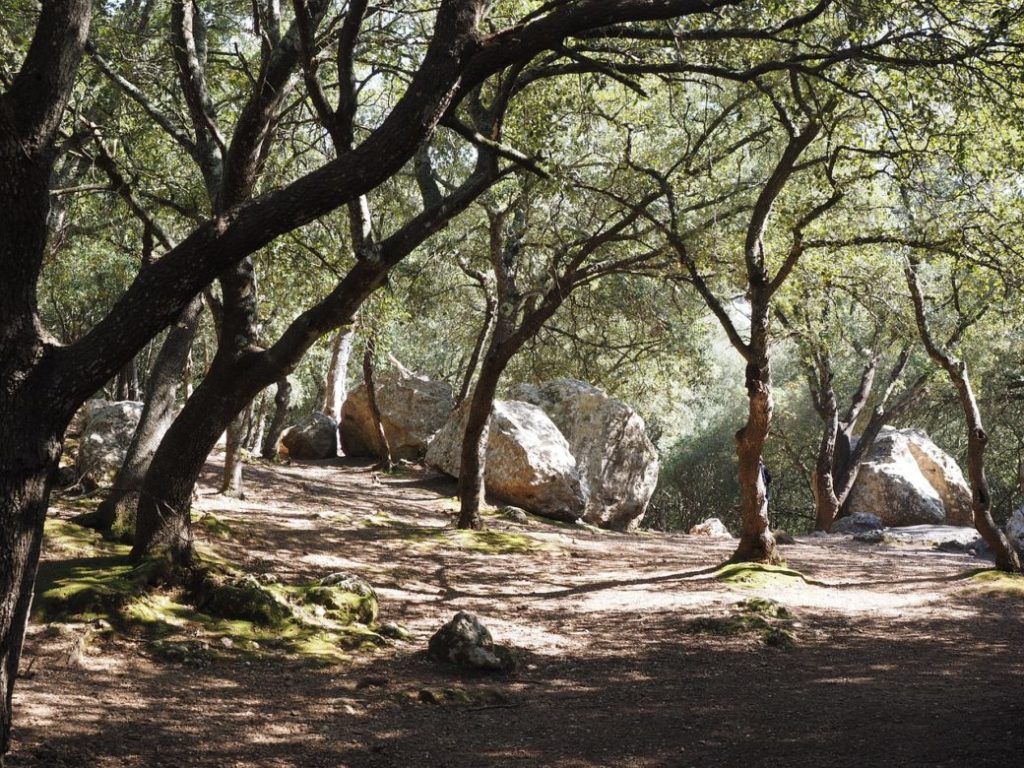
Discover the Coanegra Valley in Mallorca: an exclusive natural setting offering peace and privacy for discerning connoisseurs. Be inspired.
Just a few minutes off the coast, you'll dive into Coanegra Tal in another world: dense deciduous forest, babbling water, hidden springs and farmland with centuries-old irrigation techniques. Who Mallorca from its green, quiet and authentic Anyone wishing to experience the valley – whether as a hiking destination, leisure paradise or future residential area – will find one of the most atmospheric places on the island here. This guide will show you how to explore the Coanegra Valley at a relaxed pace and what routes and activities are on offer.
Where is the Coanegra Valley – and what makes it so special?
The Vall de Coanegra lies within the municipal area of Santa Maria del Camí, on the edge of the Serra de Tramuntana, the striking mountain range in the northwest of Mallorca. From Palma de Mallorca is reachable by car in about 15 to 20 minutes from Santa Maria del Camí. From there, a narrow road, later a network of paths, leads deep into the secluded valley. Geographically, the valley extends From northwest to southeast and is crossed by the Torrent de Coanegra, a streambed that carries water mainly in winter and spring and often dries up in the summer months. At the valley floor are small Fields, orchards and historic estates, which are traditionally irrigated by the Sèquia de Coanegra, an ancient water channel with Roman roots that still enables agricultural use today.
The Coanegra Valley is characterised by lush vegetation, especially after Rainy seasons, shady forest paths, stream crossings as well as historical hydraulic structures and old fincas. The atmosphere is peaceful and secluded, with significantly fewer visitors than in the coastal regions. Anyone who primarily associates Mallorca with beaches will experience a surprising side of the island here: Fast-acting Alpine landscapes encountering the proximity to vineyards and almond groves and conveying a very original, nature-close image of Mallorca.
Those who wish to understand life on the island more deeply, can use the Coanegra Valley as an entry into the world of the Mallorcan mountain landscape. You can get an impression of the larger context in the article about the Serra de Tramuntana.
Coanegra Valley and the Serra de Tramuntana – Mallorca's green backbone
The Serra de Tramuntana is considered a scenic landmark of Mallorca and has been designated a UNESCO World Heritage Site. This mountain range runs along the northwest coast of the island and significantly shapes the climate, vegetation, and the entire landscape. The Vall de Coanegra is part of this protected area and forms a natural link between the inland plain of the island and the first foothills of the mountains.
The Serra de Tramuntana is also Mallorca's largest mountain range, and within it lies Puig Major also the island's highest mountain, which at around 1,445 metres stands significantly taller than the other peaks and is located in a militarily restricted area. Which region of Mallorca is considered the most beautiful cannot be answered on a general basis. However, many connoisseurs particularly appreciate the combination of mountains and coastal proximity in and around the Serra de Tramuntana. For those seeking peace and quiet and nature lovers, the island's interior around Santa Maria del Camí, Binissalem Or Sineu and valleys like the Coanegra Valley are among the most attractive areas – especially as retreats with high demands for tranquility, landscape, and quality of life.
The surroundings of the Coanegra Valley offer an exciting environment, especially for nature-loving property buyers seeking a country house, a finca, or a villa in a quiet location. An initial overview of suitable property types on the island can be found in the guide to Fincas in Mallorca.
Hiking in the Coanegra Valley: gentle routes and spectacular waterfall
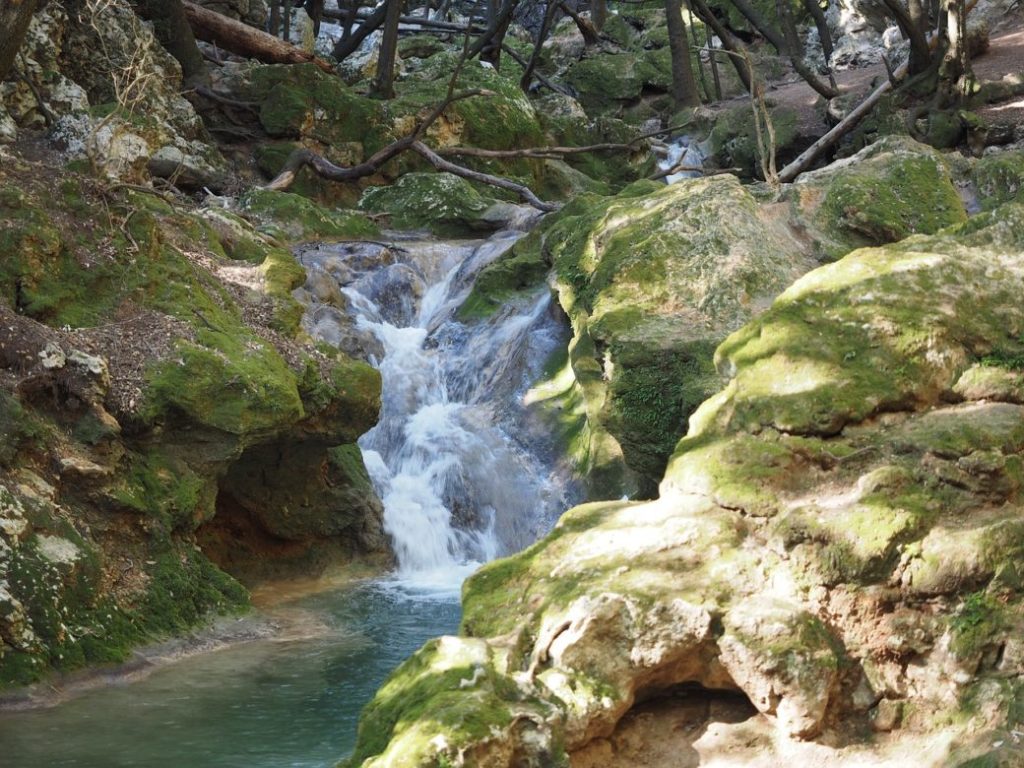
The Vall de Coanegra It is considered one of the best entry points for discovering Mallorca's mountains on foot, without undertaking a challenging summit tour right away. The paths are mostly moderately ascending or almost level and technically not very demanding. This makes the valley particularly suitable for leisurely hikers and those returning to hiking, for families with children who enjoy walking, and for active retirees who prefer longer distances but value relaxed routes.
Classics: From Santa Maria del Camí to the Vall de Coanegra
A classic starting point is the local area of Santa Maria del Camí. From here, field and farm tracks lead past traditional estates like Son Oliver or Son Roig towards the gradually narrowing gorge of Coanegra. Along the way, dry-stone walls, cultivated land, old water channels, small bridges, and shady sections along the stream bed characterise the landscape. Depending on the chosen route, the walking time for a round trip is between two and three hours. The valley is particularly attractive from October to April, when lush greenery, clear visibility, and pleasant temperatures create ideal hiking conditions.
Detour to the Es Salt des Freu waterfall
A popular detour leads to the waterfall Salt des Freu Waterfall, the most spectacular natural point in the area. This natural system of steps and cascades is located in the upper reaches of the stream and is particularly impressive after rainy winters when the water tumbles over the rocks. A visit to the waterfall is often combined with sections of the Camí de Coanegra, creating varied circular routes. These connect the more open high valley near Orient with the lower-lying, densely wooded Coanegra Valley and range – depending on the route – from short walks of around five kilometres to extensive, sporty day tours.
Canyoning in the Coanegra Valley: A water experience for the active
Whoever it Vall de Coanegra those who wish to experience it more intensely and sportily can explore the valley as part of a guided canyoning tour in the Torrent de Coanegra explore. Several specialised outdoor activity providers specifically use the streambed as a starting area, as the gorge is technically relatively easy to access, the jumping and abseiling heights remain moderate, and dry sections with water-bearing sections alternating. The Torrent de Coanegra is therefore considered ideal gorge for beginners with average fitness.
The pure time spent in the canyon is usually around two to three hours, supplemented by a short approach and a return journey via easily accessible forest and hiking paths. Typical elements of such tours include the entry into the area of Salt of Joy, abseiling passages on natural rock ledges as well as – depending on the water level – short swimming stretches in clear rock pools. The return journey often offers more beautiful views into the stream gorge and the surrounding valley. For many participants, this creates a particularly immediate impression of Mallorca inner mountain range, which clearly goes beyond the classic hiking experience and makes the Coanegra Valley a versatile nature and recreational area.
During dry periods, the water flow is reduced, but the rock formations become more prominent. Especially those already familiar with classic coastal hikes will discover a different, wilder side of Mallorca here. The article on... provides a supplement to this. Nature parks in Mallorca.
Natural and Cultural Heritage in the Coanegra Valley
The Vall de Coanegra convinces not only as an attractive area for hikers and nature enthusiasts, but also as a historically evolved cultural landscape. The centuries-old use of water and the geological structures in the limestone are particularly characteristic of its special nature.
Central is the Coanegra Canal, a historic irrigation channel that carries water from the spring of Finca Son Pou towards Santa Maria del Camí The channel. Written sources document the regulated use of water rights as early as the 16th century, while the technical origins of the system date back to Roman times. To this day, the channel supplies gardens and small orchards in the valley floor, parts of the historic town centre, and former mills and homesteads along its course. For buyers and investors interested in historic estates, this functioning water infrastructure opens up particularly attractive prospects, for example in the restoration of traditional fincas or in high-quality re-interpretations of Mallorcan country houses.
This cultural heritage is complemented by several karst caves and sinkholes in the valley area, including Es Bufador de Son Berenguer, L’Avenc de Can Millo and Son Pou Sinkhole. These natural hollows play an important role in the local water cycle, as rainwater disappears underground here and re-emerges elsewhere. Parts of the cave system are explored on guided tours by experienced speleologists, while even from the outside, the view impresses visitors without special knowledge, clearly demonstrating how closely nature, geology, and human use are intertwined in the Coanegra Valley.
Practical Planning: How to enjoy the Coanegra Valley relaxed
So that a trip to the Vall de Coanegra To make the most of your visit, some brief preparation is advisable. The best times to visit are considered to be autumn and spring, with mild temperatures and lush vegetation. The winter period is particularly appealing after the rainy season, when the Salt des Freu and the Torrent de Coanegra are carrying a lot of water. During the summer months, the stream is often dry, and longer hikes are best recommended for the early morning or late evening due to the heat.
The main access routes lead from Santa Maria del Camí from signposted routes into the valley or from the road between Bunyola and Orient towards the Salt of Joy. The signage is generally good, with GPS tracks or up-to-date hiking maps offering extra security on quieter sections. The classic valley walks are easy to moderate, while longer round trips in the direction of the Orient or Alaró require good fitness and a surefootedness.
FAQ for the Coanegra Valley and Mallorca's Green Heart
1. How is the best way to get to the Coanegra Valley?
The most common starting point is Santa Maria del Camí, which you can reach from Palma in about 15-20 minutes by car or train. From there, signposts and country paths lead towards Vall de Coanegra. Alternatively, many visitors use the access from the road between Bunyola and Orient, particularly if they wish to visit the Es Salt des Freu waterfall. Current route suggestions can be found on popular hiking portals as well as on the tourism website of Santa Maria del Camí.
2. Which hikes are particularly recommended in the Coaneagra Valley?
The valley hike from Santa Maria del Camí to the Vall de Coanegra is very popular. Circular routes connecting Orient, the Es Salt des Freu waterfall, and the Camí de Coanegra are also frequently walked. The route lengths vary between approximately 5 and 20 kilometres, depending on the chosen path. The trails lead through woodland, along fields, and past the Torrent de Coanegra. Visitors with a sporting ambition can also experience the valley as part of guided canyoning tours in the streambed.
3. When is the best time to visit the Coanegra Valley?
The most attractive time to visit the Coanegra Valley is between October and April. During these months, the temperatures are pleasant, and the Torrent de Coanegra often carries water after rainfall. The Salt des Freu waterfall is particularly impressive in winter. In the height of summer, the shaded paths are refreshing, but the stream often remains dry. In this case, it is advisable to schedule activities for the early morning hours.
4. Is the Coanegra Valley suitable for families with children?
The Coanegra Valley is well-suited for children who enjoy hiking. The paths in the lower valley are mostly moderate, and the nature offers many sights, such as flocks of sheep or small water features. The approach to the Salt des Freu waterfall is considered an easy hike, provided slippery sections are avoided and safe areas are adhered to. For canyoning tours, depending on the provider, there are specific age and size recommendations that should be clarified beforehand.
5. Is the Coanegra Valley an argument for buying property inland on the island?
Yes. The Coanegra valley is one of the region's strongest locational advantages around Santa Maria del Camí. Owners benefit from the combination of tranquility, direct access to nature, and quick connections to Palma. Those who own a finca in the interior of the island or a well-located villa can often reach the valley in a few minutes and easily integrate hikes or walks into their daily lives. Specialised real estate advisors assist with the selection of suitable properties and with legal matters.
6. What is the name of the largest mountain range on the island of Mallorca?
The largest mountain range in Mallorca is called Serra de Tramuntana. The mountain chain stretches across the northwest of the island, shapes the landscape and climate, and forms the framework for numerous valleys such as the Coanegra Valley. Hikers, cyclists, and property buyers with a focus on nature appreciate the Serra de Tramuntana as Mallorca's central scenic backbone.
 German
  English
  Spanish