
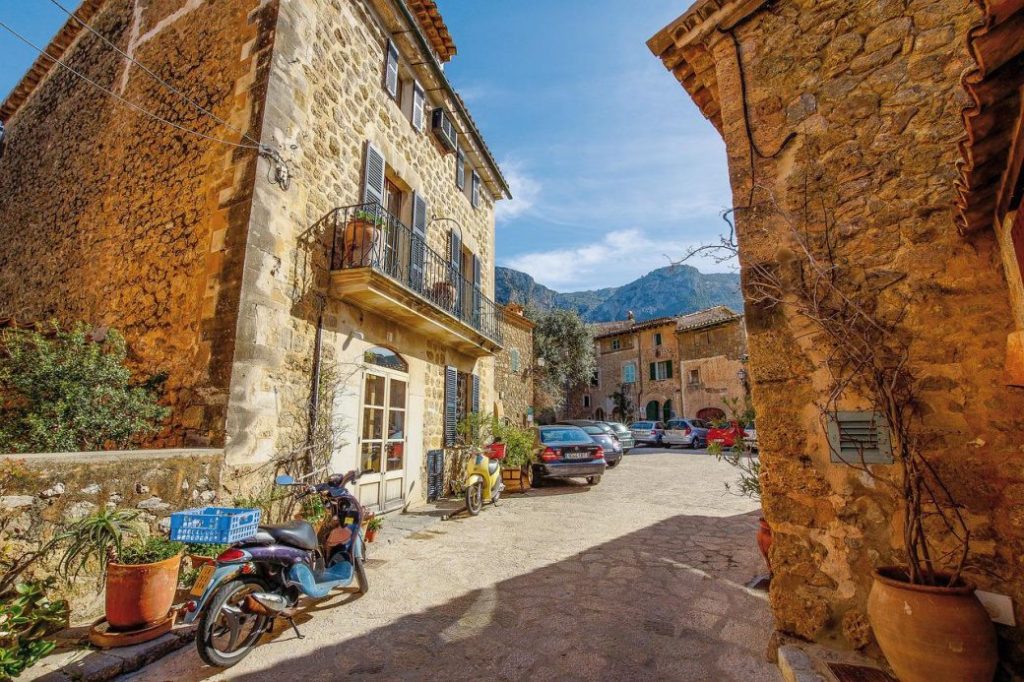
Deià, Mallorca represents a form of luxury that makes a quiet statement: natural stone, sea views, culture, privacy, and a village centre that retains its character despite international attention.
Anyone who knows Mallorca will recognise Deià immediately. The houses cling to the hillside like pale shells, behind them the Serra de Tramuntana rises, and in front of them, the terrain slopes down to the sea. Nothing seems accidental. Even the narrowness of the streets is part of its character.
For buyers with a sense of substance, Deià in Mallorca is one of the island's rare locations where landscape, architecture, and social prestige combine in an unusual way. The village suits people who don't seek a resort, who don't want to show off, and who aren't looking for ostentatious luxury. What matters here is the view from the dining room window, the silence in the early morning, and the short distance to art, cuisine, and the coast.
Why Deià, Mallorca, seems different from other luxury locations on the island
Deià, Mallorca, is situated on the northwest coast between Valldemossa and Sóller, right in the heart of the UNESCO-protected cultural landscape of the Serra de Tramuntana. UNESCO describes the Tramuntana as a terraced agricultural landscape with historic water management systems, dry-stone walls, and centuries-old adaptation to steep terrain. It is precisely these layers that still shape Deià today.
The appeal arises from limitation. There are no sprawling new developments, no endless rows of apartments, no interchangeable coastal construction. The topography sets clear lines. This protects the character and limits the supply.
Deià, Mallorca appeals to buyers looking for a property to occupy. A finca in the terraced hillsides tells a different story than a villa in Son Vida or a penthouse in Palma. Those looking for comparisons can find them in our article about the Best areas in Mallorca A good classification of the most important residential areas.
Deià, Mallorca: An artist village, a retreat, and a status symbol
The village has been attracting writers, musicians, collectors, entrepreneurs and people with a fine sense of aesthetics for decades. This reputation does not come from marketing brochures. The community itself refers to Robert Graves, Manuel de Falla, Santiago Rusiñol, Norman Yanikun and other artists who have shaped Deià. Robert Graves lived in Deià from 1929 until his death in 1985; his house Ca n’Alluny now serves as a literary museum.
Deià, Mallorca, hardly flaunts its celebrity status. And therein lies its power. Those who live here can disappear more easily into everyday life than they could in harbours, on golf courses or in beach clubs. Discretion is created by paths, walls, differences in elevation and a social environment that understands restraint.
This point explains why Deià Mallorca features in discussions about Mallorca's most affluent villages appears regularly. Wealth rarely shows itself in grand gestures here. An old stone house with a view of the coast, a secluded garden, an interior of art and patina: That's enough.
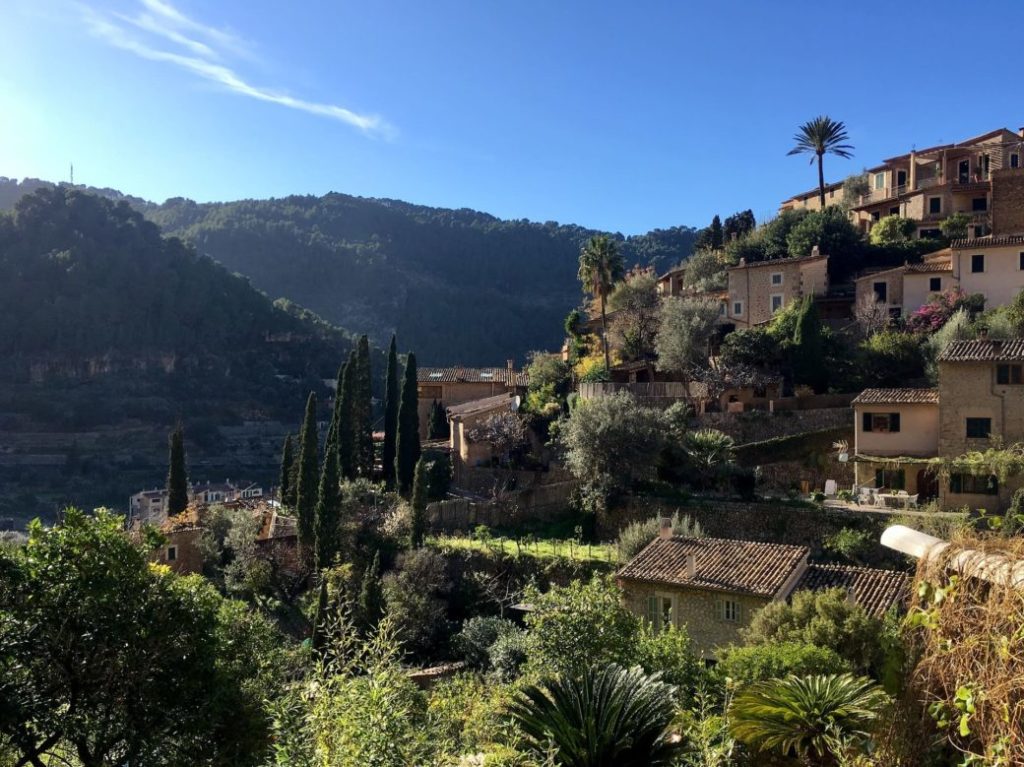
Sights in Deià Mallorca: Small in scale, grand in experience
Deià, Mallorca, doesn’t require a ten-point to-do list. The place operates slowly. Anyone who walks up the alleys to the Sant Joan Baptista church experiences the village's drama: natural stone facades, cypress trees, Via Crucis tiles, terraces, the blue of the sea between rooftops.
The church, the graveyard and the view over the village
The parish church of Sant Joan Baptista sits on the Es Puig hill. According to the municipality, it dates from the 16th century; in the 18th century, after a reconstruction, it took on its current form. The bell tower also served a defensive purpose in the past. Directly next to it is the small cemetery with the graves of well-known personalities, including Robert Graves.
The view from the cemetery is one of the most powerful moments in Deià, Mallorca. Houses, olive groves, mountains, and the sea arrange themselves into a picture that no camera can fully capture. For buyers, this view is often one of the quiet selling points: it creates a connection.
Robert Graves' House
The Robert Graves House is located between the village centre and S’Empeltada on the Ma-10. The foundation preserves the site as a literary house with an exhibition; the Balearic government acquired Ca n’Alluny after the death of Beryl Graves in 2003, and the Robert Graves Foundation was established in 2005.
For visitors, the house provides a key to the village. After a tour, Deià, Mallorca, appears less as a backdrop and more as a spiritual space: a place where isolation, light, landscape, and language intertwine.
Son Marroig and Sa Foradada
Son Marroig lies outside the village centre on the coastal road. Archduke Ludwig Salvator of Austria acquired the estate in 1870, redesigned it and had the well-known marble temple built overlooking Sa Foradada. The municipality designates Son Marroig as the starting point for the path down to the rock formation; the round trip hike to Cala de Sa Foradada takes approximately two and a half hours.
Anyone planning a route through Deià, Mallorca, would best connect Son Marroig with Valldemossa or Sóller. For lovers of viewpoints, it's worth taking a look at our guide to the Mallorca's most impressive viewpoints.
Deià Mallorca Beach: Cala Deià is not a classic resort
Cala Deià is located below the village. It is small, rocky, photogenic, and in high demand during the season. Spain.info states Cala Deià is around 40 metres long and mentions bins and a cleaning service; other beach guides describe it as a stony cove with very limited space.
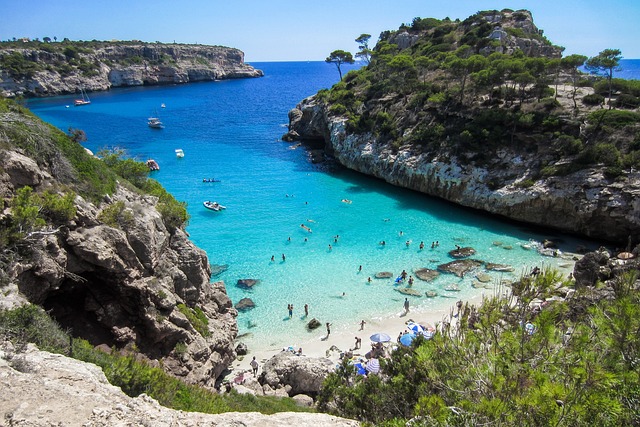
Those who associate „Deià Mallorca beach“ with long stretches of sand will be mistaken. Cala Deià is suitable for a dip in the water, lunch by the sea, and a few hours in a dramatic coastal landscape. For families with small children or guests wanting sun loungers, a shallow entry, and plenty of amenities, other beaches are a better fit. Our overview provides inspiration on the most beautiful beaches in Mallorca.
The path to the bay is along a narrow road. Car parks fill up early. In peak season, the walk down from the village is worthwhile, provided you have the stamina and suitable footwear. Deià Mallorca rewards early hours: before lunch, before the tour groups, before the midday heat.
Deià Mallorca parking: Patience doesn't replace planning
Parking is one of the village's few harsh realities. The roads remain narrow, space is scarce, and demand is high. Even the Michelin Guide explicitly recommends reserving a parking space for a restaurant in Deià, as parking in the village can be difficult.
For a visit to Deià, Mallorca:
- Arrive early, ideally before 10 am.
- Use official parking areas, do not block driveways or verges.
- Plan the walk to Cala Deià on foot in case the lower car park is full.
- Connecting restaurant reservations with parking queries.
- Check bus or driver for day trips, especially during peak season.
The council names the L203 bus route as the connection between Port de Sóller and Palma via Deià and Valldemossa. For groups of ten or more people, the council recommends enquiring about availability in advance.
Deià Mallorca Route: How to have a stress-free day
A good route through Deià, Mallorca, doesn't start with haste. The village doesn't tolerate a tick-box mentality. Those who take it seriously plan windows of time, not minutes.
- Morning (village centre, Sant Joan Baptista church, cemetery): Take advantage of the best lighting conditions and lower visitor numbers for exploration and great photo opportunities.
- Lunch (Cala Deià or village restaurant terrace): Book in good time and clarify the parking situation beforehand.
- Afternoon (The House of Robert Graves or Son Marroig): Choose culture over beach routine – an ideal addition, especially for first-time visitors.
- Late afternoon (Sa Foradada, Valldemossa or Sóller): Let the day end in a relaxed way and adapt the route according to the season, heat and traffic.
Those who enjoy hiking should check out the historical route towards Son Coll and Font de ses Mentides. The municipality describes the trail as easy, taking just over an hour; it follows old connections between Deià and Sóller. For active days around Deià, Mallorca, our contribution on cycling in Mallorca is suitable, especially for guests who want to experience the Tramuntana with a sporting focus.
Deià Mallorca Restaurant: Culinary Delights Amongst the Sea, Terraces and Village Life
Deià's gastronomy thrives on the interplay between location and atmosphere. Some restaurants focus on the view, others on old village houses, and still others on their proximity to the cove. Reservations take priority during the season.
The Michelin Guide lists Ca Ses Sauerschell’s in Deià, which operates in the premises of the former Es Racó d’es Teix. The description highlights the terrace with views over Deià and the Serra de Tramuntana, as well as a more relaxed concept run by the daughters of the previous owners.
At Cala Deià, restaurants combine the bathing experience with a long lunch. This works well as long as expectations are right: rustic coastal character, limited seating, high demand. Those who generally enjoy authentic food will find it in the guide to local restaurants in Mallorca further addresses with a local flair.
Deià Mallorca Hotel: An exclusive stay or your own retreat?
Deià, Mallorca, offers some of the island's most atmospheric stays. Boutique hotels, historic houses, and discreet luxury addresses characterise the area. One hotel shows what life feels like here. Owning your own property changes your perspective.
For a first visit, a hotel is worthwhile to test the daily rhythm, routes, light, and neighbourhood. Buyers will sense after a few days whether Deià suits them. The place demands an enjoyment of narrow streets, hillside locations, quiet, and a certain seclusion. Those seeking short journeys to marinas, international schools, or golf courses are better off comparing with Bendinat, Port Andratx, Son Vida, or Santa Ponsa.
For this comparison, our contributions assist in Mallorca Apartments by Lifestyle and Life by the sea in Mallorca. Deià, Mallorca, rarely suits people looking for maximum convenience. It suits people who value character over comfort without rough edges.
Real estate in Deià, Mallorca: scarcity determines the market
The Deià, Mallorca property market follows different rules to many coastal locations. Supply is rarely generated, demand remains international, and purchasing decisions are heavily dependent on the view, plot, history, condition, and access. Two houses with similar living space can have completely different market values if one boasts unobstructed sea views, terraced land, and privacy.
Typical object types:
- Renovated village houses with natural stone and terraces,
- Historic fincas on hillsides,
- Villas with sea views outside the village centre,
- Small estates with olive groves, gardens and guesthouses.
In Deià, Mallorca, due diligence is paramount. Buyers examine building permits, usable floor space, rights of access, water issues, heritage protection, energy efficiency, and potential for modernisation. Our guide Buying property in Mallorca explains the procedures surrounding NIE numbers, notaries and bank accounts; for price developments, it's worth looking at Property prices in Mallorca 2026.

When searching for a property in Deià, Mallorca, a confidential enquiry with clear parameters is worthwhile: desired orientation, use as a primary or secondary residence, willingness to renovate, privacy, access and budget. The team at Marcel Remus Real Estate will check suitable properties, often including offers that are not publicly advertised. Start your search via Marcel Remus Real Estate in Mallorca.
Deià Mallorca weather and best time to visit
The weather in Deià, Mallorca follows a Mediterranean rhythm, yet its location in the Tramuntana mountains lends it a more nuanced character than flatter coastal areas. Spring and autumn offer ideal conditions for sightseeing, hiking and long, leisurely meals. Summer brings the most vibrant colours, but requires early planning. Winter reveals the village's quieter side.
For buyers, the off-season is valuable. In January, February or November, Deià, Mallorca shows what everyday life feels like when day-trippers are absent and the village slows its pulse. Those who want to live there year-round will scrutinise these months. Our climate contribution Climate in Mallorca provides supplementary guidance.
Deya Mallorca Map: Location, Distances and Surroundings
On the map, Deià on Mallorca appears close to everything. In practice, the Ma-10 dictates the pace. Palma is around 40 to 50 minutes away, depending on traffic, with Sóller and Valldemossa considerably nearer. The route is one of the island's most beautiful drives, but it demands attention.
This situation creates a special everyday life:
- Culture and restaurants are right on your doorstep.
- Palma remains accessible without dominating its urban surroundings.
- The coast appears wild rather than urban.
- The Tramuntana shapes light, sounds and leisure activities.
Anyone who frequently travels to international schools, the airport, or business meetings in Palma will be honest about their travel times. Deià Mallorca is perfectly suited as a sophisticated retreat. For daily commuting comfort, other locations are more suitable, such as Son Vida, Bendinat, or Palma itself. Our article provides an overview of safe areas in Mallorca.
When Deià Mallorca is the right choice
Deià, Mallorca is not a location for every wealthy individual. The village clearly separates between people who define luxury by space, comfort, and visibility, and people who seek atmosphere, history, and landscape.
Deià is suitable if you:
- Appreciating privacy and cultural density,
- preferring a property with character over a sleek, new-build design,
- Loving slopes, natural stone and terrace landscapes,
- Accepting visitor flows without reducing the place to that,
- Looking for a second home with soul.
Deià in Mallorca is less suitable if you prioritise short distances to large supermarkets, marinas, international schools, golf clubs and flat sandy beaches. In this case, it is worth comparing with Property in Andratx, Property in Bendinat Or Real estate in Son Vida.
Frequently asked questions about Deià Mallorca
There isn't one single "most beautiful" place on Mallorca, as beauty is subjective and the island offers a diverse range of stunning locations. However, some of the most frequently cited and highly regarded beautiful places include: * **Serra de Tramuntana:** This UNESCO World Heritage mountain range is renowned for its dramatic landscapes, picturesque villages like Valldemossa, Deià, and Sóller, and incredibly scenic drives. * **Caló des Moro:** A small, secluded cove with crystal-clear turquoise waters, dramatic cliffs, and white sand. It's often described as a paradise. * **Es Trenc:** A famous long stretch of unspoiled, white sandy beach with shallow, clear water, often compared to Caribbean beaches. * **Cap de Formentor:** The northernmost point of the island, offering breathtaking panoramic views of the Mediterranean Sea and rugged coastline, including a beautiful lighthouse. * **Cala d'Or:** Known for its charming coves (calas) with golden sand and clear blue waters, surrounded by pine trees and white-washed buildings. * **Sóller Valley:** A lush green valley famous for its orange groves, traditional villages, and the historic tram that connects Sóller town to the port. Ultimately, the "most beautiful" place will depend on what you're looking for – dramatic mountains, secluded beaches, charming villages, or panoramic sea views.
Many Mallorca connoisseurs name Deià, Fornalutx, Valldemossa or Pollença. Deià in Mallorca scores with the rare combination of mountain village, sea view, art history and exclusive residential location. Those looking for the most beautiful place decide according to their feeling for life: Deià stands for discreet luxury, Fornalutx for mountain idyll, Valldemossa for a historic setting.
The market in Deià, Mallorca is on Sundays.
The market in Deià takes place on Wednesdays from 8:00 AM to 1:00 PM. The Consell de Mallorca organises the Deià Market with this exact timeframe. For visitors, it's advisable to arrive early, park without stress, and combine your market visit with a coffee in the village.
Which celebrity lives in Deià, Mallorca?
Deià, Mallorca, is historically most associated with Robert Graves, who lived and is buried there. The village attracted artists, musicians, and international personalities for decades. Current residences of prominent individuals are a matter of privacy; reputable advice respects precisely this boundary.
What can you experience in Deià, Mallorca?
In Deià, you'll visit the Church of Sant Joan Baptista, the cemetery overlooking the village, Robert Graves' House, Son Marroig, and Cala Deià. Additionally, there are hikes towards Son Coll, lunch with views of the Tramuntana mountains, and excursions to Valldemossa or Sóller. Deià in Mallorca is ideal for culture, nature, and relaxing days of enjoyment.
Is Deià, Mallorca, suitable for buying property?
Yes, if you define exclusivity by rarity, privacy and location. The market remains tight, the scrutiny of individual properties demanding. Marcel Remus Real Estate supports buyers with selection, valuation, discretion and negotiation in the luxury segment.
How difficult is parking in Deià Mallorca?
Parking in Deià, Mallorca, requires planning. Official parking areas fill up early in season, especially around Cala Deià and popular restaurants. Arrive in the morning, avoid roadside parking, and enquire about spaces when making restaurant reservations.
 German
  English
  Spanish