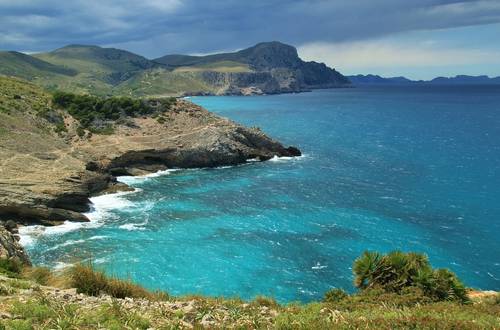
The east coast of Mallorca offers on a small scale exactly what the entire island is all about. Marcel Remus introduces you to this fascinating part of the island.
Picturesque bays and sandy beaches stretch out alongside rugged rocks. Mountains and flora stand out on the horizon, and life can be found in both cities and idyllic villages. Nevertheless, the east coast of Mallorca is still less well-known than the other regions of the island – and it is precisely for this reason that it is of interest for real estate.
Serra de Llevant: A View Over Mallorca's East Coast
The eastern coastal mountain range, Serra de Llevant, may not be as impressive as the northern mountains at first glance, but it wins you over on a second and every subsequent look. Green valleys and countless paths invite you to Hiking and discovering nature Even by bike the area can be wonderfully explored. At the northern tip of the Serra de Llevant, there is also a nature reserve. The Parc natural de la Llevant is the largest nature park in Mallorca and is worth a visit not only in summer. For refreshment after hikes, an excursion to Cala Mandrago is worthwhile.
The picturesque bay offers two waterfalls, soft sand and is framed by pine and fir woods.If the beach is too crowded, you can go to the nearby Cala S’Amarador. For snorkel and dive enthusiasts, the east coast of Majorca has Cala d’en Marcal. The bay juts far into the island, and even the seabed is sandy. This makes the beach a paradise for relaxing, swimming, and snorkelling for young and old alike. Like most other beaches and places, the region is child-friendly and therefore also ideal for families.
From mountains to bays and through rolling hills, the green landscape offers plenty of variety. Let your soul unwind or gain a new perspective on the east coast of Mallorca by boat – there's something for everyone here. Of course, it's not just the landscape that makes the coast an attractive holiday and residential destination.
Calm and peaceful: The atmosphere of Mallorca's east coast
Plantagen und Fischerei – this is what life in the villages revolves around. Here, everything is still calmer and more relaxed. Even compared to the rest of the island, the east is pleasantly sleepy. There’s no sign of hectic activity. Bustling crowds and Bonfire, music and dancing There are several times a year during the festivals of various saints. There is no shortage of festivals and traditions either. Weekly Markets and markets are also part of the region's original charm.
It is precisely these contrasts and the relaxed mentality that have also helped make the east coast of Mallorca so popular. It's not for nothing that you might spot a familiar face or two while strolling through Artà. Because famous personalities also, or perhaps especially, know to greatly appreciate the sophisticated atmosphere. The town of Artà, meaning "garden" in German, is particularly popular with stars, and tourists are rarely found there. This is unjustly so, as the town offers sights and has some highlights in store.
It's a completely different story in Cala Ratjada and Cala Millor. Bars and restaurants are just a small part of the vibrant nightlife. Numerous sporting and leisure activities ensure Active variety during the day.
Sights on the east coast of Mallorca
The picturesque alleyways, sleepy villages, and diverse landscape are already worth visiting and sights of a different kind. Alongside these, however, are also historic towns.
Just like the Calvary in Artà, for example. Sant Salvador as impressive pilgrimage church and medieval castle complex
are framed by a breathtaking backdrop. This is also offered
from the viewing tower in Portopetro, the historic fishing village with a
genuine natural harbour. Portocolom is ideal for your next excursion.
The supposed birthplace of Christopher Columbus is still today
characterised by fishing and is still one of the best
places to enjoy freshly caught fish dishes.
Anderer
in Capdepera. Located near Cala Ratjada, few tourists venture here and miss the discovery of Castell de Capdepera. The castle was built in the 14th century, and the entire fortress complex around the town also holds significant historical value. In addition, there are other historic buildings, including the church of San Joan and the chapel of Nuestra Senyora de la Esperanza.
Similarly interesting and a must for history fans is the small town of Son Servera and also Porto Cristo
lets historians' hearts beat faster through the mystical cave system.
Ermita de Betlem with the monastery, which was only recently vacated,
connects in turn History with the breathtaking landscape of the East Coast
from Mallorca. Nestled in the Serra d’Artà, the hermitage involves a climb. This offers spectacular views from the mountains over a landscape of both cultivated and wild vegetation, the sea, and the historic building. Since the monastery is so hidden away, it's not overrun with tourists and is almost an insider tip.
A change of pace, perhaps? Then Cala Millor, a lively tourist resort, is the right choice. Instead of traditional weekly markets, here Bars, Restaurants, leisure and sports facilities
the scene. The town is located not far from Porto Cristo, making it another example of the appealing contrasts and apparent opposites that are so characteristic of the diversity of the east coast. Relaxing in nature, sunbathing on the beach, or enjoying culinary highlights before diving into the nightlife – all this and more is possible, and each within easy reach of the other. A completely new world can be experienced with just a day trip. Whether it's a sleepy fishing village or high-rise buildings surrounded by white sandy beaches as far as the eye can see. This too contributes to the charm of the east coast of Mallorca.
Climate and vegetation on the east coast of Mallorca
The east coast of Mallorca enjoys a typical Mediterranean climate. Winters are mild and frost-free, and with just under 51 rainy days a year, the view is almost always clear bright blue sky.Plenty of sunshine contributes to relaxation and well-being.
From May to November, the water temperatures invite you to take a refreshing dip in the sea.
This climate is also the precondition for the vegetation.
Fragrant forests with pines and firs, holm oaks, aromatic rosemary, palms and bougainvillea define the landscape. Over 1,500 plant species
are native to the coasts, valleys and hills. The flora, therefore, is also diverse and varied. The fauna is similar. Reptiles bask on stones and rocks. Amphibians and fish are found in large numbers in standing and flowing waters. When hiking in the mountains, it is not uncommon to encounter wild goats. The birdlife, which is very diverse, deserves special attention. Those who want to increase their chances of spotting the local fauna should visit one of the nature reserves. However, the protected parks are worth a visit on their own for the views they offer.
Impressive property landscape on the east coast of Mallorca
In addition to the scenic diversity, culture and history, the relaxed mentality and numerous contrasts on the east coast of Mallorca, the regions are also Impressive property landscapes
with manifold possibilities. Some stars recognised this years ago and bought properties here as a retreat. Nevertheless, the east coast remains underestimated, which has a positive effect on the property market and offers buyers many options.
However, due to the numerous advantages, it is uncertain how long the east coast of Mallorca will remain an underestimated gem. In the future, the region, which is almost an insider tip, could develop into a popular holiday destination with numerous hotspots.
Cover image: Copyright @ Pixabay / cocoparisienne
 German
  English
  Spanish