
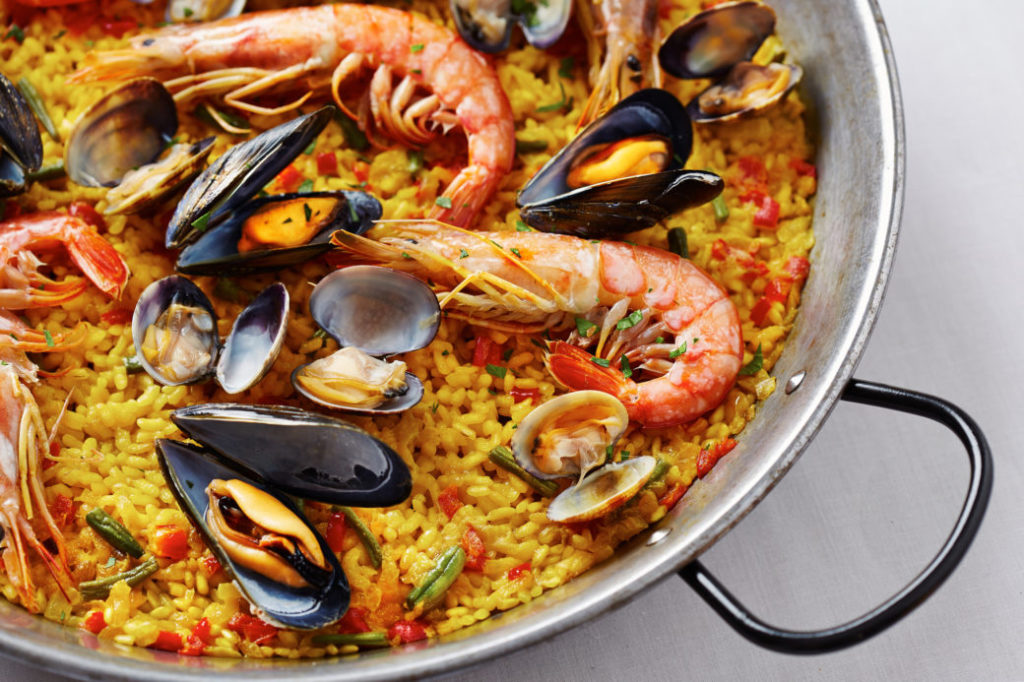
Mallorcan cuisine is renowned for its versatility. The sea, with its abundance of seafood and fish, plays a particularly important role.
Traditional and hearty, yet it still retains a light touch. Mallorcan cuisine primarily uses products that are grown, produced, and caught directly on the Balearic island. It features fish and meat varieties, combined with vegetables such as aubergines, peppers, tomatoes, and courgettes.
The Mediterranean-esque flavour is provided by piquant spices, rounded off with hearty garlic and high-quality olive oil. Just like on the Spanish mainland, small appetisers have also become established on Mallorca, the so-called Tapas, They are meant to satisfy hunger between meals. These typical tapas are served with a glass of beer or wine and come in many variations. Very popular are succulent pieces of tortilla (egg and potato omelette), spicy albondigas (small, round meatballs) and piquant olives. A particularly delicious tapa is the Mallorcan speciality ‚Pamboli‘, a slice of toasted bread, first rubbed with garlic and tomato, followed by a few drops of olive oil. To try authentic Mallorcan cuisine, it is worth making a detour to the local bodegas and tascas and bypassing the tourist-oriented restaurants.
Mallorcan Cuisine and its Influences
Over the millennia, Mallorca has been conquered by various peoples, a heritage that the local cuisine still benefits from. The Romans brought grapevines, while the Byzantine conquerors imported cumin, saffron, and vanilla. Greek sailors introduced olives, and in return, the Moorish invaders brought almonds and oranges.
These delicious products have become established on the island and are now indispensable to Mallorcan cuisine. Mallorca can rely on its native soil treasures for cooking, in conjunction with freshly caught fish such as sardines and, in addition, delicate seafood. Meat is also an indispensable component of Mallorcan cuisine; locals favour lamb, rabbit, suckling pig, game birds and goats. The more authentic the ingredients, the better. On this basis, chickens are allowed to live freely, just like the black pigs (Cerdo negro), which roam half-wild outdoors and feed on acorns and chestnuts. This aromatic meat results in the exclusive Pata Negra ham, which is now exported all over the world.
Typical dishes in Majorcan cuisine
Hearty soups, substantial stews and savoury meat dishes characterise Mallorcan cuisine. These dishes are intended to keep the hard-working islanders full for a long time and help them regain their strength. In the tourist regions, somewhat lighter versions of these recipes have become established, also suitable for the hot temperatures during the summer months. Multi-course menus are popular, which are enjoyed with pleasure, lots of time and leisure. After the starter of appetising tapas, a soup often follows, for example the ‚Mallorcan Vegetable Soup‘ (Coal dish with meat insert) or the ‚Caldereta‘ (Seafood stew with lobster and tomatoes, peppers and onions). Another widely eaten speciality is ‚Sobrassada‘, a sausage made from the meat of the indigenous black pig breed.
Also typical is the consumption of snails, not just in their animal form, but also in the shape of a snail-shaped pastry, the ‚Ensaïmada‘. Just as with the preceding dishes on the menu, fresh, locally grown ingredients are also used for the desserts. These primarily include fruits such as figs, oranges, grapes, and lemons. The consistent freshness and quality of the produce is a characteristic hallmark of Mallorcan cuisine and its excellent recipe for success.
Almonds, herbs and eating habits
Im Frühling erstrahlt das ländliche Mallorca im Glanz der Mandelblüte. Almond blossom,Here, several million almond trees spread their sweet scent far and wide. Accordingly, after the harvest, the many almonds find their use in a wide range of dishes and products. A traditional treat is the ‚Nougat‚a sweet pastry variant, which predominantly consists of crispy almond brittle. Almond cakes and almond chocolate are also very popular; they are eaten as dessert with a herbal schnapps. For the production of ‚Hierbas‘, the islanders combine local herbs with distinctive anise. Breakfast is very neglected in the Balearics, but lunch and dinner are all the more substantial. However, visitors should adjust to slightly later mealtimes; in the evening, the food often only after 9 p.m. served.
Image: Copyright: ©iStock.com/martiapunts
 German
  English
  Spanish